As a field of study, transnational feminism emerged in the 1980s in response to a singular “global” feminism that erased differences and inequalities between women. Rather than adopting the paradigm of “global sisterhood,” indeed criticized as highly problematic due to its frequently imperializing and homogenizing forms of “knowing,” transnational feminist analyses more explicitly includes geopolitical … Continue reading A Workshop in Transnational Feminism/Atelier sur le féminisme transnational
Author: thenewcanadianhistory
2017 Wilson Prize Nominees!
Maxime Dagenais It’s the time of year again (does the second time make it a tradition?) when we reveal the nominees for the Wilson Book Prize and the Viv Nelles Essay Prize. And once again, after months of deliberation, we have come up with a shortlist of three books and three essays that we believe … Continue reading 2017 Wilson Prize Nominees!
Regime Change, Law, and Borders in the Heart of French North America during the Eighteenth Century

Robert Englebert Note: The following is partial reprint (abridged and edited) of the article “The Legacy of New France: Law and Social Cohesion between Quebec and the Illinois Country, 1763-1790,” French Colonial History 17 (2017): 35-65. How do we think about borders and regime change in French North America during the eighteenth century? For … Continue reading Regime Change, Law, and Borders in the Heart of French North America during the Eighteenth Century
WHEN THE WILSON INSTITUTE ASKS YOU TO PUT ON THE ACADEMY AWARDS OF GRADUATE CONFERENCES …
Carly Ciufo From the outside, academia appears to offer those who partake in it a life full of reading and writing. And, to some degree, it does. At the LR Wilson Institute for Canadian History and in the Department of History at McMaster University, students are pushed by their professors and colleagues to do some … Continue reading WHEN THE WILSON INSTITUTE ASKS YOU TO PUT ON THE ACADEMY AWARDS OF GRADUATE CONFERENCES …
Perfectly acquainted with all parts of his beat: Imagining the Ideal Police Officer and His Work in Mid-Nineteenth-Century Canada
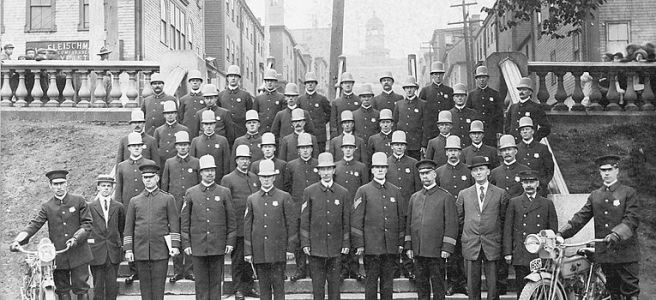
Dan Horner In 1841, Montreal publisher James Starke published a slim volume entitled Regulations for the Governance of the Police Force. Produced under the guidance of the former Police Commissioner of Lower Canada, William Coffin, the book’s target audience was ambitious officers looking to move up the ranks of their organization by familiarizing themselves with … Continue reading Perfectly acquainted with all parts of his beat: Imagining the Ideal Police Officer and His Work in Mid-Nineteenth-Century Canada
On Inequality, Taxes, and the Party System in Canadian History
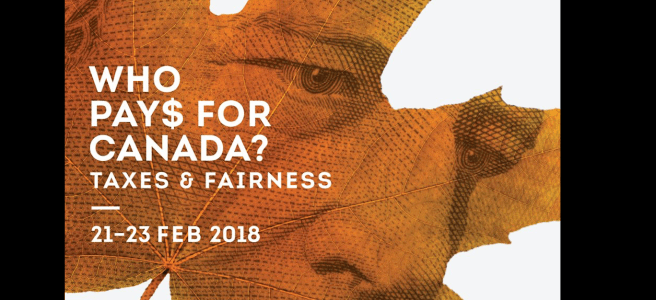
Beyond Borders will publish a series of articles related to and in anticipation of “Who Pays for Canada? Taxes and Fairness,” a conference on taxes and fairness organized by Dr. Elsbeth Heaman that will take place at the McGill Institute for the Study of Canada from February 21-23. Today, we have a special fourth article! … Continue reading On Inequality, Taxes, and the Party System in Canadian History
On Racism and Taxation: Rethinking the Chinese Head Tax, 1885-1923
Beyond Borders will publish a series of articles related to and in anticipation of “Who Pays for Canada? Taxes and Fairness,” a conference on taxes and fairness organized by Dr. Elsbeth Heaman that will take place at the McGill Institute for the Study of Canada from February 21-23. Today, we have our third. Laura Madokoro … Continue reading On Racism and Taxation: Rethinking the Chinese Head Tax, 1885-1923
Black-Market Gumdrops
Beyond Borders will publish a series of articles related to and in anticipation of “Who Pays for Canada? Taxes and Fairness,” a conference on taxes and fairness organized by Dr. Elsbeth Heaman that will take place at the McGill Institute for the Study of Canada from February 21-23. Today, we have our second of three. … Continue reading Black-Market Gumdrops
Lending an Ear to the Archive: Rethinking Law and its Administration in Early British Quebec
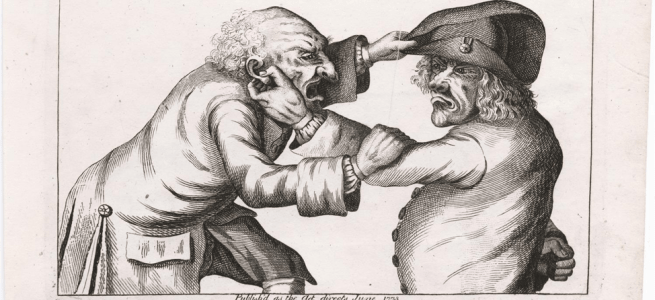
Brendan Gillis An ear can change history, or at least the way that scholars write about it. On the cold winter night of December 6, 1764, Thomas Walker heard a knock at his door in Montreal. Suspecting that “it was a Number of [French] Canadians” attending “upon Business [with him] as a Justice of Peace, … Continue reading Lending an Ear to the Archive: Rethinking Law and its Administration in Early British Quebec
Fairness between Economics and History in Canada
Prefatory note: “The Thunder of World History.” Are Canadians fair or is that just a story we tell ourselves? Can we reason our way to lessened inequality or does history teach that violent cataclysms are the only levelling power, as Thomas Piketty and Walter Scheidel argue? How do we maintain a sense and an approximation … Continue reading Fairness between Economics and History in Canada
 Au delà des frontières : La nouvelle histoire du Canada/ Beyond Borders: The New Canadian History