Whose Canada150?: Listening beyond Colonial Narratives

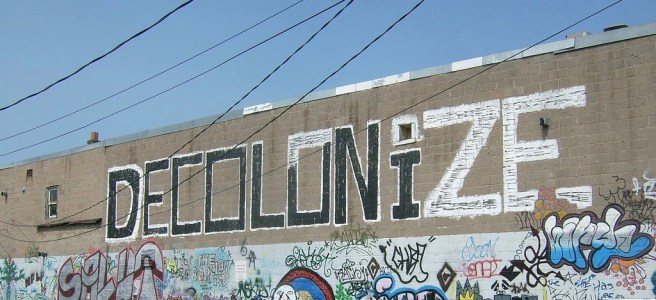
Stacy Nation-Knapper What is Canada150? What are Canadians celebrating and why? Who is included and who is excluded from Canada150? When Dr. Dawn Martin-Hill spoke on March 23 as part of the Wilson Institute’s Canada150 speaker series, she remarked that 150 years of Canada should be uncomfortable. Celebrating 150 years of colonialism should be an … Continue reading Whose Canada150?: Listening beyond Colonial Narratives

Not Subject to the Scorn and Contumely of the Great: Alexander McNutt’s Nova Scotia

Alexandra Montgomery As an American born kid growing up in Halifax, the question of why that chunk of land stayed British while the rest of the colonies to the south declared independence was something of a puzzle. I became even more confused when I learned that most of the people who lived there at the … Continue reading Not Subject to the Scorn and Contumely of the Great: Alexander McNutt’s Nova Scotia

Undiplomatic History: A Symposium on Rethinking the History of Canada in the World

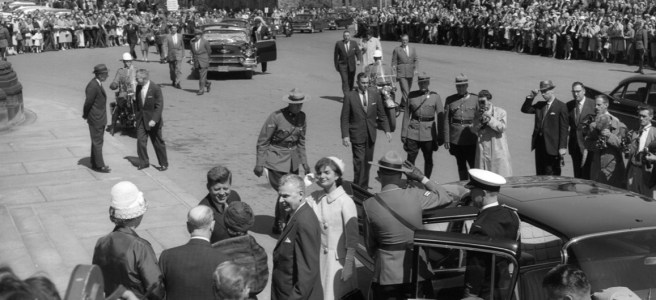
Phil Van Huizen & Asa McKercher International history has become marginalized in Canada and it is time to fix the problem. In fact, repairs are already underway. The Wilson Institute at McMaster University will host a symposium from 27-29 April that seizes upon a gathering momentum in Canadian history for a return to relevance for … Continue reading Undiplomatic History: A Symposium on Rethinking the History of Canada in the World

How to Find Subversive Canadians at 150

Carly Ciufo I was at The Forks in Winnipeg, Manitoba on September 20, 2014 for the opening of the Canadian Museum for Human Rights (CMHR). Working among colleagues who were both excited and anxious to finally open its doors, the day’s programming culminated in a concert headlined by some pretty heavy-hitting Canadian talent. That afternoon, … Continue reading How to Find Subversive Canadians at 150

“The most exploited section of the working class”: The Canadian Communist Party, International Communism, Nationality, and Racial Equality in the Interwar Period

Oleksa Drachewych This blog post is published in conjunction with a workshop on Transnational Leftism that the Wilson Institute for Canadian History and Oleksa Drachewych are currently organizing and accepting applications for. Based around issues relating to the Comintern and National, Colonial, and Racial Questions, the Wilson Institute invites all that are interested to submit … Continue reading “The most exploited section of the working class”: The Canadian Communist Party, International Communism, Nationality, and Racial Equality in the Interwar Period

Henry David Thoreau, French Canada, and l’Américanité

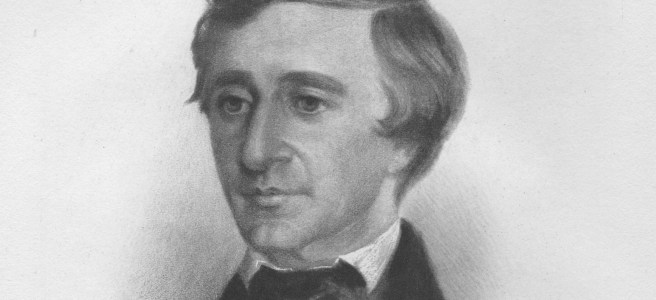
Patrick Lacroix It was a paradox of the age that, as national boundaries hardened and central state authority grew from the late 1830s to the 1850s, continental integration accelerated. The advent of the railway era and the expansion of telegraph lines increased cross-border encounters between British North America and the United States. These technologies created … Continue reading Henry David Thoreau, French Canada, and l’Américanité

A Curious Connection: Continental and Atlantic Histories in a Creek and Cherokee Voyage to Quebec

James Hill One of the most exciting things about archival research is discovering unexpected connections. In November 2013, I traveled to the Bahamian National Archives in Nassau in search of documentary evidence relating to a group of intrepid Native diplomats, sojourners from the Creek and Cherokee Nations in what is now the southeastern United States. … Continue reading A Curious Connection: Continental and Atlantic Histories in a Creek and Cherokee Voyage to Quebec

Y a-t-il encore quelque chose à dire sur « les Rébellions de 1837-38 » ?

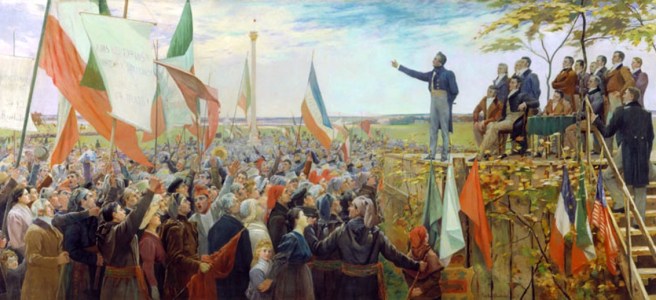
Julien Mauduit Lors de la projection, au Centre d’histoire des régulations sociales à l’UQAM, de l’entretien de Jean-Marie Fecteau réalisé par Louise Bienvenue et Stéphanie Lanthier, un professeur, en apprenant que je travaillais sur les patriotes, m’a lancé sous forme de boutade : « Ah, il y a encore quelque chose à dire sur les Rébellions ? ». Le … Continue reading Y a-t-il encore quelque chose à dire sur « les Rébellions de 1837-38 » ?